When a bird poops on you, the most direct answer to "what does it mean" is this: it means a bird pooped on you. The bird was not sending a message, choosing you specifically, or delivering a cosmic verdict. But that is not the whole story, because this particular mishap carries a long, surprisingly consistent thread of folklore across many cultures, and plenty of people find real comfort or curiosity in that. So this guide covers both sides: the practical (why it happens, what to do right now, how to stay safe) and the interpretive (what people have believed and why that belief is worth understanding, even if you do not take it literally).
Bird Poops on You Meaning: What It Likely Means and What to Do

Marcus Holloway
22 Mar 2026
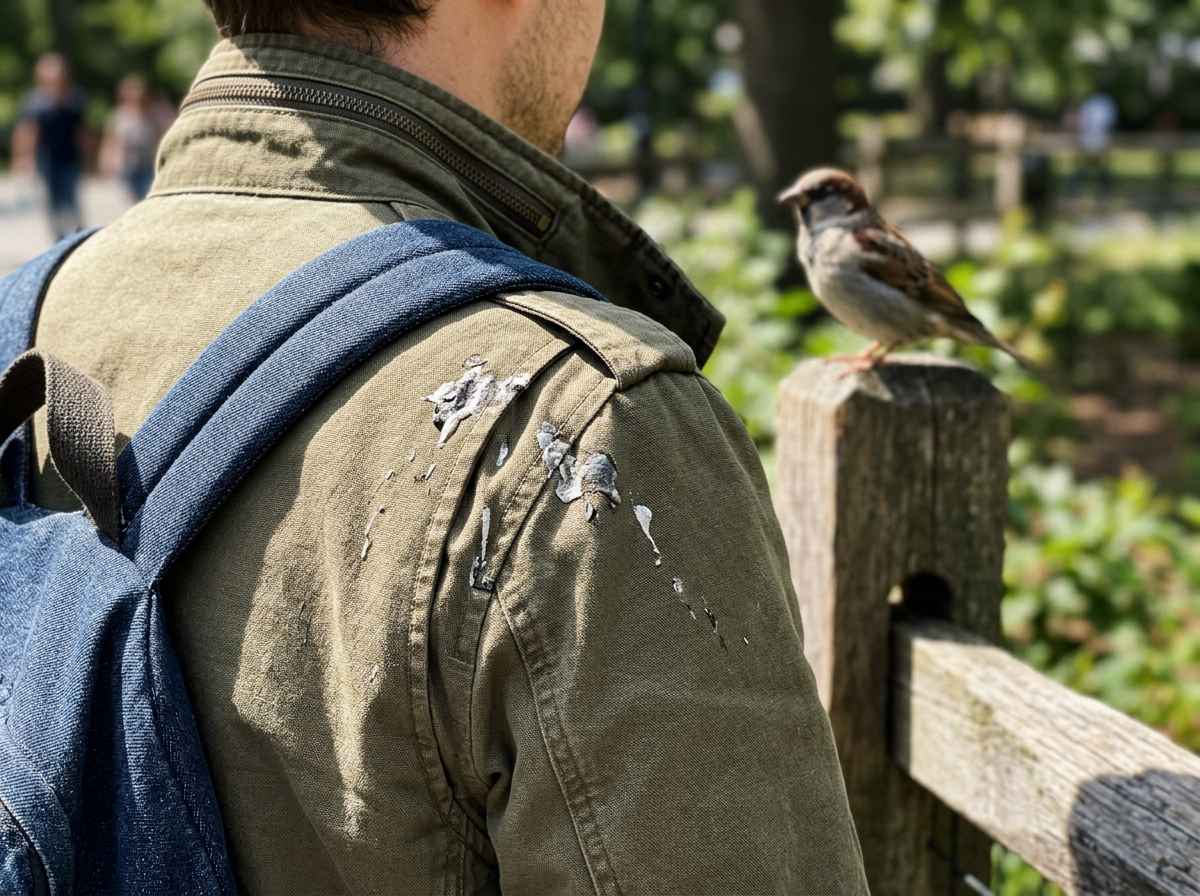
What the phrase actually means (and what it usually doesn't)
Searching "bird poops on you meaning" almost always comes from one of two places: you just got hit and you are curious whether anyone thinks that is significant, or you have heard the good-luck claim and want to know if there is anything real behind it. The phrase itself does not have a fixed, single meaning in the way an idiom like "bird-brained" does. It sits in the category of superstition and folk belief, not established symbolism or ornithology.
The dominant folk belief, recorded in archives from USC to Dartmouth, is that bird droppings landing on you signal good luck, often specifically wealth. One version even mirrors the broken-mirror superstition: break a mirror and you get seven years bad luck, but get hit by a bird and you get seven years good luck. The Superstition Library frames it as "good luck and incoming wealth," and head-specific versions (more on that below) lean even harder into the wealth framing.
What it almost never means in any serious cultural framework: a warning, a curse, a punishment, or a sign that something bad is coming. If anything, the cross-cultural lean is toward the positive. That said, no folklore should be read as a literal prediction. As Birdfact frames it well, the belief is really about how people interpret random, uncontrollable events, not about any causal force in the droppings themselves. So feel free to take the good-luck framing as a fun reframe of a mildly awful moment, not as financial advice.
Why birds actually choose you (they don't, but here's what's really happening)
Birds do not choose targets. The biology is much simpler. Research on streaked shearwaters published in Current Biology found that these birds poop almost exclusively while flying, roughly every 4 to 10 minutes during flight. The working hypothesis is that defecating during flight or takeoff makes flight physically easier, since the bird is offloading weight. That means any living thing or object below a flight path is a potential target purely by geometry and timing, not selection.
For perching birds, the timing is also behavioral rather than intentional. Birds commonly defecate when startled, when taking off, or simply when their digestive process runs its course while they are sitting above you on a wire, branch, or ledge. A few factors do make you more likely to be in the wrong spot:
- Sitting or standing under trees, power lines, rooftop ledges, or pier railings where birds perch regularly
- Wearing bright colors, which can attract curious birds closer overhead
- Being in open plazas, parks, or outdoor dining areas where large gull or pigeon populations congregate
- Feeding birds, which draws them directly above and around you
- Being stationary for a long time, which simply increases your exposure window
In short, location and timing explain almost every incident. You were under a flight path or a perch at the wrong moment. There is no behavioral evidence that birds single out individuals.
Bird poop on you vs. on your head: does the location change anything?
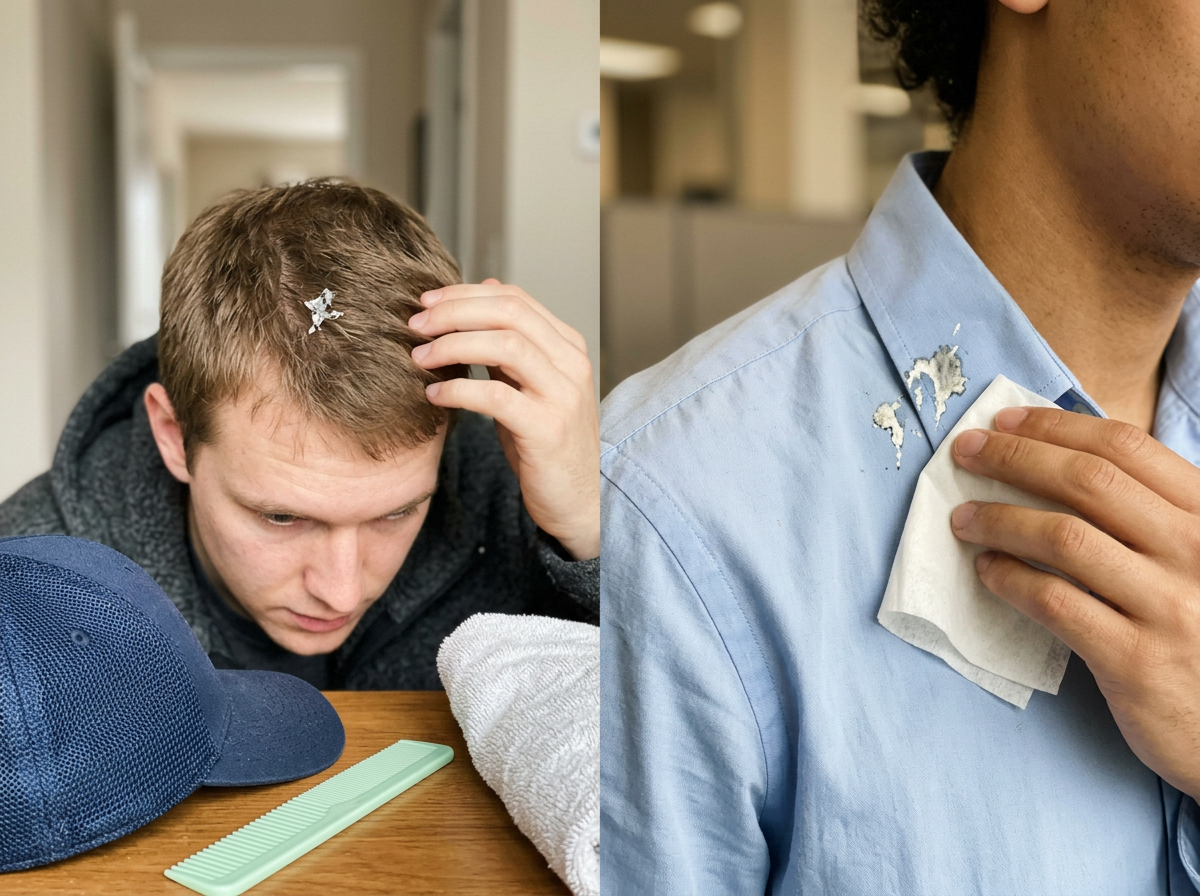
From a practical standpoint, yes, the location matters a lot for cleanup and mild health considerations. From a folklore standpoint, the head does carry a slightly distinct meaning in some traditions. bird droppings on head meaning bird droppings on head meaning
The folklore angle on head-specific hits
Multiple folk belief sources, including Dutch-language media coverage of personal accounts and the Superstition Library's write-up, specifically tie a bird dropping landing on the head to incoming wealth, more so than a general body landing. Some modern spiritual interpretations add a layer about the head representing the mind, wisdom, or an "anointing" with good fortune. A Dutch article title translates roughly to "Bird poop on my head brought me luck," showing that even in contemporary popular culture, the head-specific version carries a stronger fortune association.
If you want to explore bird poop on the head specifically in more depth, that topic and the broader "bird droppings on head meaning" thread have their own nuances worth reading. Similarly, if the incident happened on your car rather than on you directly, that carries a slightly different set of cultural readings covered separately under bird pooping on car meaning.
Body vs. head: what's actually different
Functionally, the head is more of a concern because hair can trap droppings close to your scalp and face, and proximity to your eyes, nose, and mouth increases the importance of careful cleanup. A dropping on your sleeve is a simpler problem. Folklore aside, treat a head hit with a bit more care during cleanup.
How to clean it up right now
The most important rule for cleanup: do not scrub dry droppings into dust and inhale it. That is not just advice for large accumulations. Even a single fresh dropping, once it dries, can release particles. Here is how to handle each situation:
On clothing
- If the dropping is still fresh, use a damp cloth or paper towel to lift it off without rubbing it in. Work from the outside edge inward.
- Do not let it dry on fabric if you can help it. Dried droppings bond to fibers and are harder to remove without agitation.
- Once the bulk is removed, rinse the area with cold water from the back of the fabric to push the residue out.
- Wash the garment as soon as possible with your regular detergent. Hot water is fine for most fabrics and helps break down any residue.
- If you cannot wash it immediately, keep the area damp with a small wet cloth until you can.
On hair or skin
- Rinse the area with running water as soon as possible. For hair, lean your head under a faucet or use a water bottle if outdoors.
- Apply shampoo or soap and lather gently. Rinse thoroughly.
- Wash your hands with soap and running water after handling the affected area, even if you used gloves or a cloth.
- Avoid wiping dry droppings off with a dry tissue before wetting them first, since that can spread particles.
If it gets near your eyes

Rinse your eye immediately with clean, lukewarm water for at least 10 to 15 minutes. If you wear contacts, remove them before rinsing if you can do so quickly and safely. Do not rub your eye. If there is persistent irritation, redness, or discomfort after rinsing, contact a healthcare provider or pharmacist. Canadian public health guidance recommends eye protection (goggles or face shields) in settings with significant bird dropping exposure, which gives you a sense of how seriously airborne particles near the eyes are taken in occupational contexts.
Health risks: when is bird poop actually a problem?
For most healthy people, a single bird dropping on your clothing or hair is a low-risk event, especially when you clean up promptly. The real health considerations come from inhaling dried droppings or having repeated, heavy exposure. Here is what you should know:
| Condition | How you get it | Symptoms (when they appear) | What to do |
|---|---|---|---|
| Histoplasmosis | Breathing fungal spores from soil or surfaces contaminated by bird/bat droppings | Fever, cough, fatigue, chest pain within 3–17 days | See a doctor if flu-like symptoms develop after known exposure |
| Psittacosis | Inhaling dust from dried bird droppings or respiratory secretions | Headache, fever, cough within 5–14 days; can progress to pneumonia | Seek medical care if symptoms appear; tell your doctor about bird exposure |
| Salmonellosis | Contact with feces and then touching your mouth (hand-to-mouth transmission) | Nausea, diarrhea, fever, cramps within hours to days | Thorough handwashing prevents most risk; see a doctor if severe |
| Bird flu (H5N1) | Close contact with infected birds or heavily contaminated surfaces | Fever, cough, breathing difficulty | Seek medical care and report exposure; this is a precautionary concern for most casual encounters |
For a single, incidental bird dropping that hits you outdoors, the practical risks are low. The main action items are: clean up promptly, wash your hands, and do not rub or scrub dry droppings in a way that sends particles into the air. The CDC's primary guidance for casual bird contact centers on handwashing and avoiding dust, not alarm. People at higher risk (those with weakened immune systems, or people who work regularly around large bird populations) should take these precautions more seriously and may want to consult a healthcare provider if they have regular exposure.
One important note: you cannot tell if a bird is carrying bacteria or fungi by looking at it. The CDC specifically notes that infected birds often show no signs of illness but can still shed bacteria in their droppings. So clean up carefully regardless of whether the bird looked healthy.
How to reduce your chances of it happening again
You cannot eliminate the risk entirely, but you can reduce it with a few straightforward habit changes:
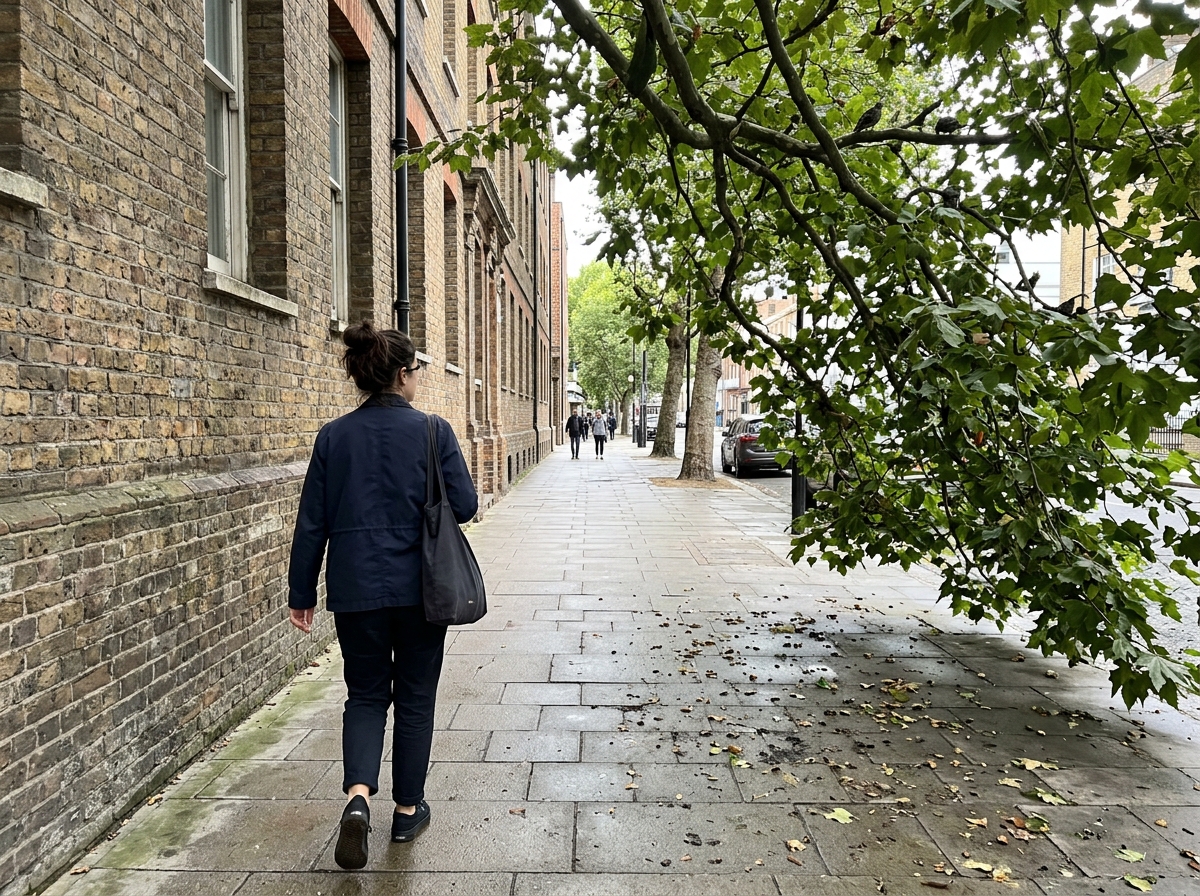
- Avoid sitting or standing directly under tree branches, power lines, pier railings, or rooftop edges where birds perch, especially in spots where you can see droppings already accumulated below
- Wear a hat in bird-heavy outdoor areas, especially during spring and summer nesting seasons when bird activity is highest
- Move away from large congregating birds (pigeons, gulls, starlings) rather than stopping near them
- Do not feed birds directly above or around yourself, since this draws them into your personal space
- In outdoor dining areas, choose a table away from overhead structures, not just under a sun umbrella, since birds often use umbrellas and awning edges as perches
- If you notice droppings already on a surface, that is a sign birds perch there regularly. Move your position.
- Wear darker or neutral-colored outer layers in heavily bird-populated areas if you want to reduce the visibility factor
None of these are foolproof because bird flight paths are unpredictable, but they significantly reduce your odds. Awareness of your environment is the biggest factor.
Cultural and spiritual readings, and how to use them sensibly
If you are drawn to the interpretive side of this, that is completely reasonable. Bird encounters have held symbolic weight across cultures for a very long time, and this website is built on exploring exactly that territory. The honest framing, though, is that these are interpretive lenses you can choose, not objective truths about the universe signaling something to you specifically.
The dominant tradition, recorded across European, American, and Russian folklore, is that bird droppings landing on you signal good luck and coming prosperity. The parallel to the broken-mirror superstition (seven years bad luck) inverted into seven years good luck shows how cultures have long used random, uncontrollable events as frameworks for managing anxiety and uncertainty. Something unpleasant happened to you? Here is a story that makes it lucky instead of just gross. That is genuinely useful psychology, even if it is not literal prediction.
The head-specific tradition (tied more strongly to wealth and what some modern writers call a kind of "anointing") connects to broader cultural symbolism around the head as the seat of mind, status, and wisdom. If you find meaning in that framing, it is a long-standing and widely shared one. If you do not, no folklore tradition requires you to.
For readers interested in how bird encounters connect to broader symbolism, the "bird pooping good luck" belief fits into a much wider system of bird omens and meanings across cultures. Birds in many traditions serve as messengers between the earthly and the spiritual, which is part of why an unexpected bird encounter, even an unpleasant one, gets interpreted as meaningful. You can hold that idea lightly, as a culturally rich lens rather than a guarantee, and still get something out of it.
The practical takeaway is this: if you want to use the good-luck interpretation as a mood-lifter after an annoying experience, you are in good company across many centuries and cultures. If you prefer to treat it as a biological accident with no special meaning, that is also well-supported by the actual science of bird digestive timing. Both readings can coexist, and neither cancels the other out.
What you should not do is skip the cleanup and handwashing because you are busy feeling lucky. The folklore and the hygiene are not in conflict. Clean up, wash your hands, note the moment if it felt significant to you, and move on with your day.
FAQ
What should I do immediately if bird poop gets into my mouth or I accidentally swallow some of it?
Rinse your mouth thoroughly with clean water, spit it out, and avoid swallowing any residue. If you develop nausea, vomiting, fever, or mouth sores later, contact a healthcare provider. If it was on food or a drink, discard it rather than trying to scrape it off and continue eating.
Is it okay to wipe bird droppings off with a dry tissue if I am outdoors and do not have water right away?
It is better than leaving it there, but avoid aggressive dry scrubbing because dried residue can become airborne. If you have no water, gently lift and bag the droppings, then wash hands and rinse the area as soon as you can. If it is on your face or near your eyes, delay wiping and rinse with water when possible.
How do I clean bird droppings from hair without making a mess or inhaling particles?
Use running water to wet the area first, then wash with shampoo. Detangle gently with fingers or a comb while wet, and keep your face turned away from where you are rinsing. Consider doing it in the shower so debris can flow down the drain, and wash hands after.
If a bird poops on my glasses, are the lenses or frame areas a higher risk than clothing?
Glasses mostly matter for transfer to your eyes. Clean the lenses with lens-safe cleaner or mild soap and water, then wash your hands before touching your eyes. Wipe the frame with a damp cloth, and avoid rubbing your eyes until everything is cleaned.
Does it matter if the dropping is fresh versus dried?
Fresh droppings generally mean fewer airborne particles, but it can still spread germs on contact. Dried droppings are the bigger inhalation concern because they can turn into dust when you brush or scrub. The safest approach is gentle wet cleanup for both, with extra caution if it has already dried.
What if it lands on my contact lens area but my eyes do not feel irritated?
Do not rub your eyes. Remove contacts if you can do it quickly and safely, then rinse eyes with clean lukewarm water for about 10 to 15 minutes. If redness, persistent irritation, or blurred vision shows up, get medical advice the same day.
How likely is it that I caught something from a single bird poop incident?
For most people after a single, incidental exposure with prompt handwashing and cleanup, risk is low. The higher risk scenarios are repeated exposure, heavy exposure near the face, or inhaling dried residue. If you are immunocompromised or you had significant eye or mouth exposure, consider checking with a clinician for personalized guidance.
Can I wash clothes normally in a washing machine, or do I need special handling?
Usually you can wash normally after pre-rinsing or wetting the spot first to prevent dust. If the droppings have dried, lightly wet and scoop off any visible material before putting the fabric in the machine. Wash hands after handling the laundry, and do not shake the garment to remove residue.
What if bird poop lands on a bald spot or directly on my scalp without hair, is cleanup still important?
Yes, cleanup is still important, but the head-specific risk is usually about proximity to eyes, nose, and mouth. For a scalp-only hit, wet cleanup and thorough handwashing are typically sufficient, unless it gets into your eyes or you end up rubbing your face.
Is there any reason to be more concerned if I work around birds or have repeated exposure?
Yes. Repeated exposure increases the chance of inhaling dried residue, so use tighter hygiene habits (mask when cleaning heavy droppings, eye protection if there is a lot of material, and proper ventilation). If you have chronic respiratory symptoms or you frequently deal with large amounts, talk with an occupational health professional.
What should I do if it happens on my car seat or dashboard, and I do not want smells or residue left behind?
For fabric, remove visible material gently, then pre-rinse with water and mild soap, and let it dry fully before using the heat or sun. For hard surfaces, clean with an all-purpose cleaner and wipe with a damp cloth afterward. Avoid dry brushing that can create dust that settles elsewhere in the cabin.
Does the folklore meaning change if it happens on the head versus the rest of the body?
In many traditions, head hits are treated as a stronger good-luck or wealth sign than torso hits, but it is still not predictive. If you care about the meaning, treat it as a personal framing, then still prioritize cleanup, especially because you are closer to eyes and mouth.
Should I take a photo or record anything after the incident?
It can be helpful if you are trying to identify where it happened or for your own reflection, but it is not necessary for hygiene. If you plan to document symptoms later, you can note the time and what body area was affected, that can help a clinician if you develop irritation.
Next Article
Bird Poaching Meaning, Motives, Signs, and What to Do
Bird poaching meaning explained with motives, signs to spot it, and a safety-first checklist of what to do.