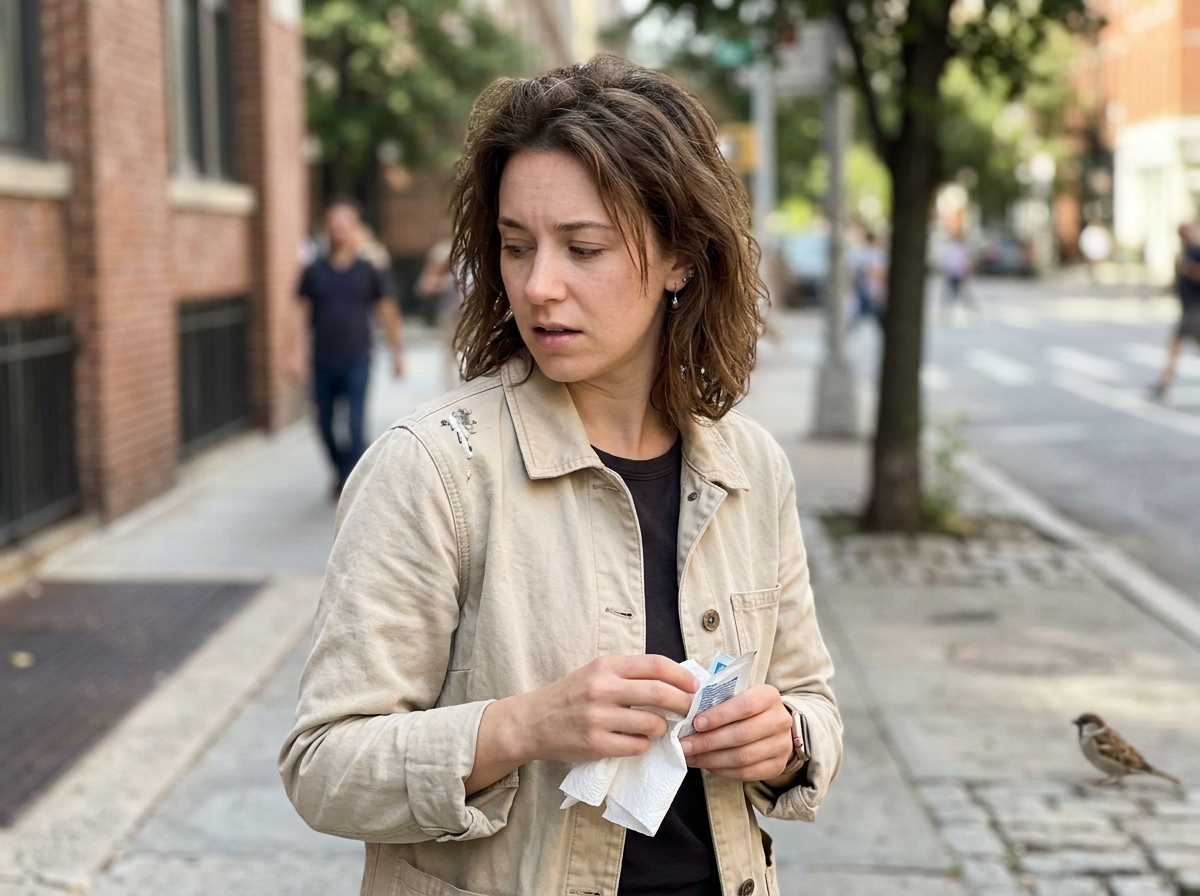
In Islam, bird poop on your car is almost certainly not a bad omen, and treating it as one would actually go against core Islamic teaching. The short answer: Islamic scholarship consistently discourages reading unusual events as signs of good or bad fortune, and bird droppings specifically fall into that category. What you do next matters more than what it "means", and that involves both a practical cleanup and a brief reset of intention. Let me walk through all of it.
Bird Poop on Car Meaning in Islam: What to Do Today

Marcus Holloway
22 Mar 2026
What Islam actually says about bird poop as a sign
The concept you're brushing up against here is called tīyarah, which refers to drawing omens from birds or other natural occurrences. This was a well-established practice in pre-Islamic Arabia: people would watch birds fly left or right, or interpret unexpected encounters with animals as signs of coming luck or disaster. The Prophet Muhammad (peace be upon him) addressed this directly and clearly. Hadith recorded in both Sahih al-Bukhari and Sahih Muslim report him saying, in effect, there is no 'adwa (contagion by fate), no tīyarah (bird omen), and no ṣafar (a Jahili superstition tied to the month of Safar). These aren't minor observations. They sit in the most rigorously authenticated hadith collections in Sunni Islam.
The Qur'an reinforces this. In Surah Al-A'raf (7:131–132), it describes earlier nations who attributed their misfortunes to the Prophet Moses and his companions, essentially blaming omens rather than recognizing divine will. The Qur'an presents this omen-thinking as a feature of rejection and heedlessness, not of sound faith. So when a bird relieves itself on your car, assigning that a spiritual weight, positive or negative, isn't really supported by Islamic theology. That said, Islam does encourage reflection on everyday events as reminders of Allah's presence and one's own gratitude. There's a meaningful difference between superstitious omen-reading and mindful awareness.
Does the location change the meaning? Car vs. body vs. head
This is worth separating out carefully, because the spiritual framing and the practical response are both different depending on where the droppings land. Many readers searching this topic are actually asking about three different situations at once: the car (a possession), the body (you directly), and the head (a specific body location). Let me address each.
Bird poop on your car
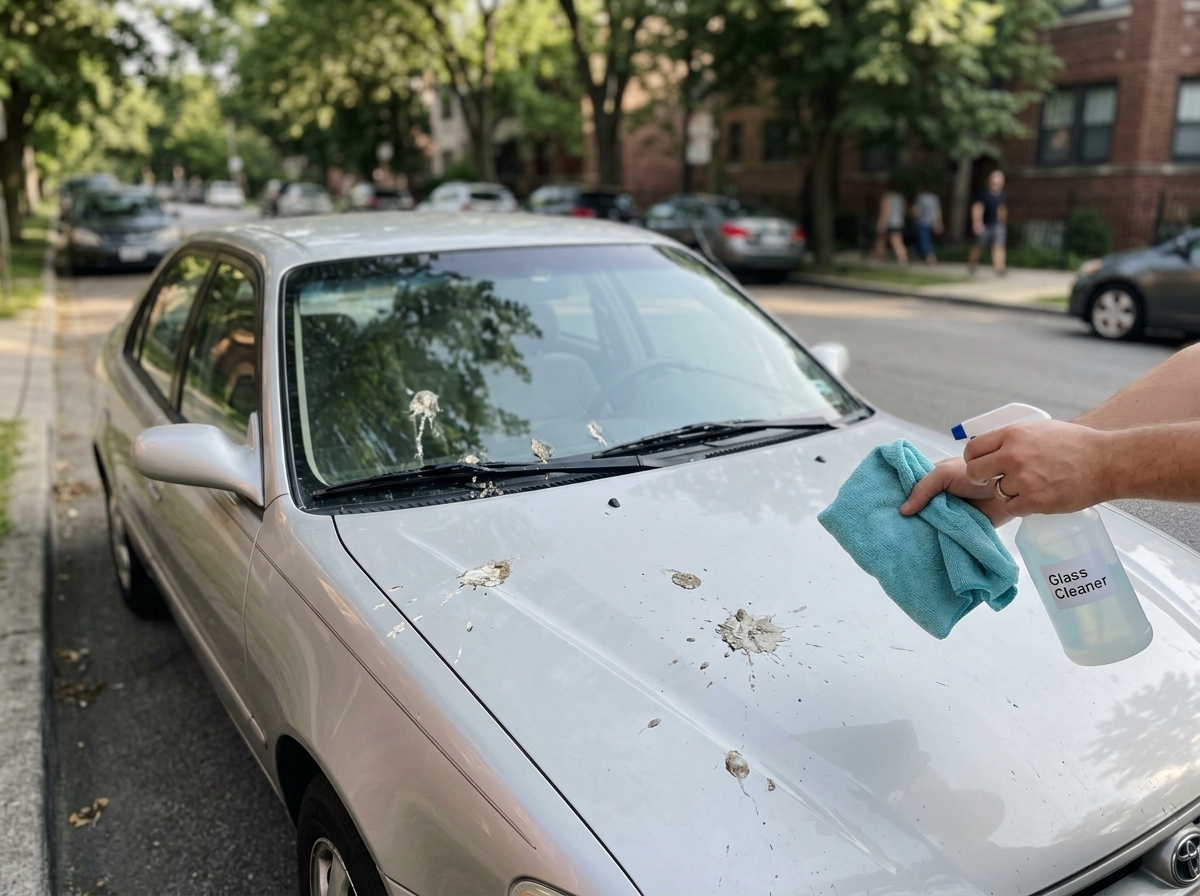
Your car is property, not your body, so there is no personal purity (tahara) concern for you directly. The droppings sitting on your car don't affect your state of ritual purity or your ability to pray. Spiritually, some Muslims might take a moment to say Alhamdulillah as a reflex of gratitude (being grateful even for small inconveniences is encouraged), but there is no established Islamic teaching that makes a car-specific bird dropping meaningful as an omen. Across world cultures, many people do associate bird poop on a vehicle with incoming luck, you'll find this in Eastern European, South Asian, and various African folk traditions, but these are cultural overlays, not Islamic ones.
Bird poop on your body
When the droppings land directly on you, two things come into play. First, there is a genuine Islamic impurity concern (more on that below). Second, many people feel a visceral, almost instinctive sense that something just "happened" to them personally. This feeling is normal, and some scholars note it's fine to treat such a moment as a gentle reminder of humility, you're not in control of everything, and that's actually a theologically rich realization in Islam. But that reflection is different from concluding the bird sent you a message. Related topics around bird poop landing on a person more broadly are worth exploring if you want more cultural context on that specific scenario.
Bird poop on your head
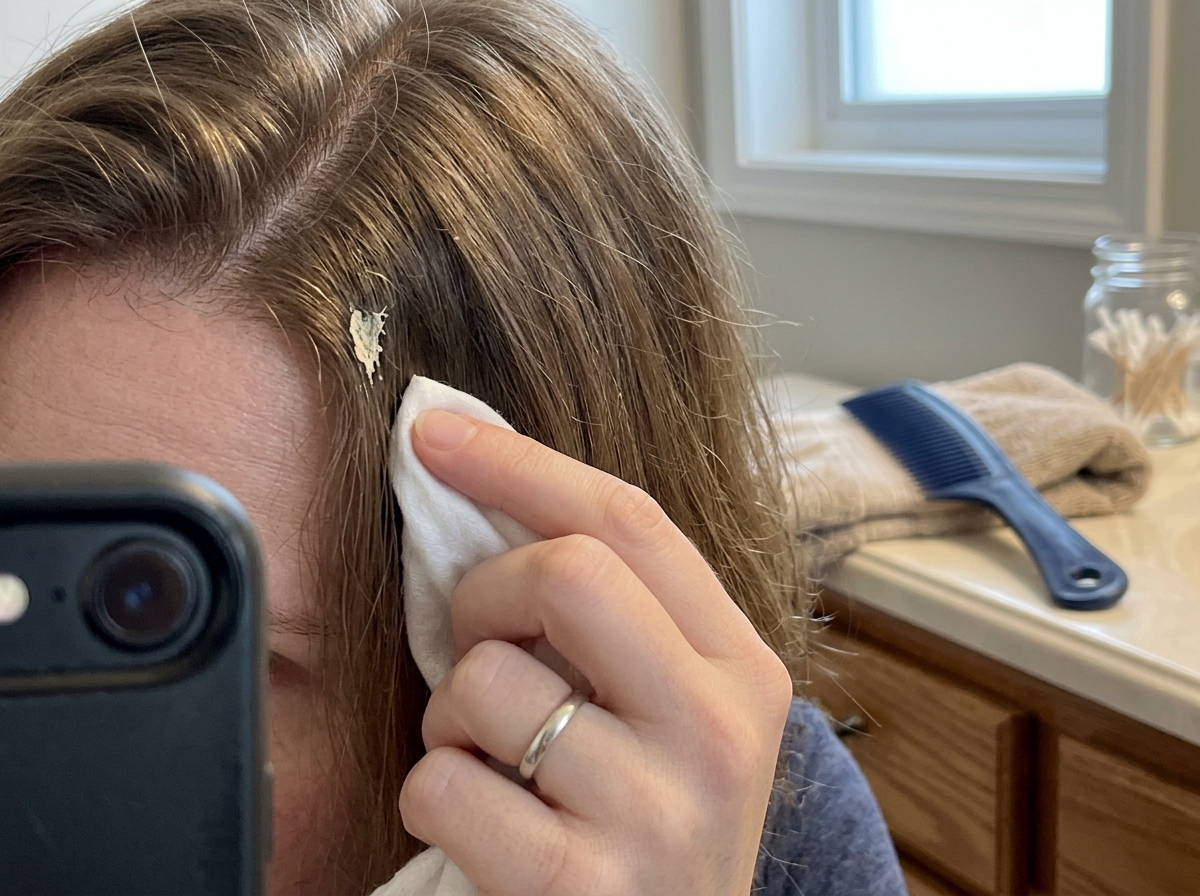
The head is singled out in many folk traditions as the most "significant" location for bird droppings, often interpreted as a strong luck or wealth sign. bird droppings on head meaning In Islamic terms, this doesn't carry any extra theological weight compared to any other part of the body. However, the head is covered during prayer for women, and many Muslim men wear a kufi or similar head covering. If droppings land on a head covering, that item becomes najis (impure) and needs to be washed before wearing it in salah. If the droppings touch the skin of the head itself, that area needs to be cleaned before prayer. The "head" location is practically significant; spiritually, in Islam, it's the same as anywhere else.
The impurity question: what Islamic law actually requires
Bird droppings are classified as najasah (ritual impurity) in Islamic jurisprudence, though scholars differ slightly on the ruling depending on which bird is involved. The majority position in the Shafi'i and Hanbali schools treats all bird droppings as najis (impure). The Hanafi school distinguishes between birds whose meat is permissible to eat and those whose meat is not: droppings from permissible birds (like chickens or pigeons) are considered excused (ma'fu) in small amounts, while droppings from impermissible birds (like eagles or crows) are najis. The Maliki school has yet another nuanced reading. In practice, if you're unsure which madhab applies to your situation, the safe and widely accepted approach is to simply clean the droppings thoroughly before prayer.
For your car: the droppings being on your car do not affect your wudu (ablution) or your ability to pray. You don't need to wash your car before salah. You should clean it because bird droppings are acidic and will damage your paint if left, but that's a practical concern, not a religious obligation.
Practical cleanup first, spiritual reset second
Whether the droppings landed on your car, your clothes, or your skin, here's what to do today in a sensible order.
Cleaning bird droppings off your car
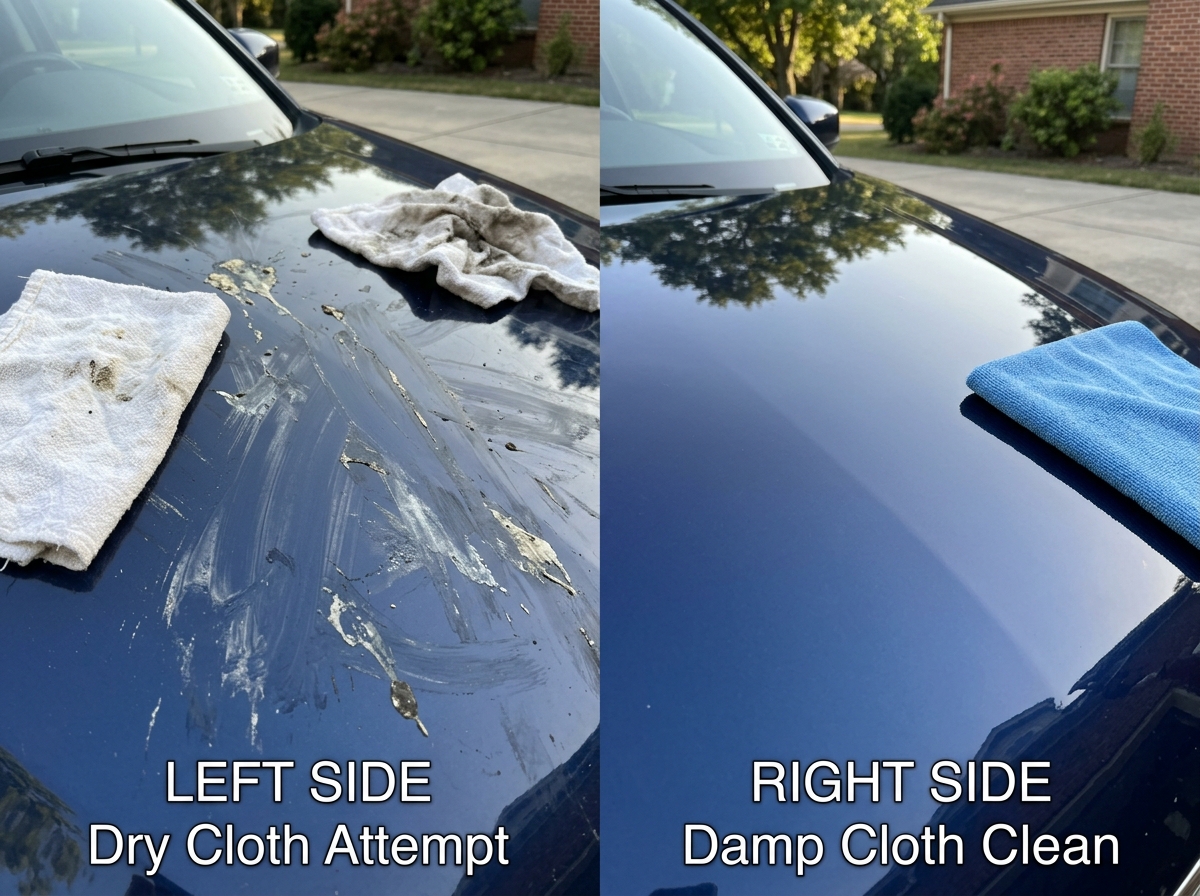
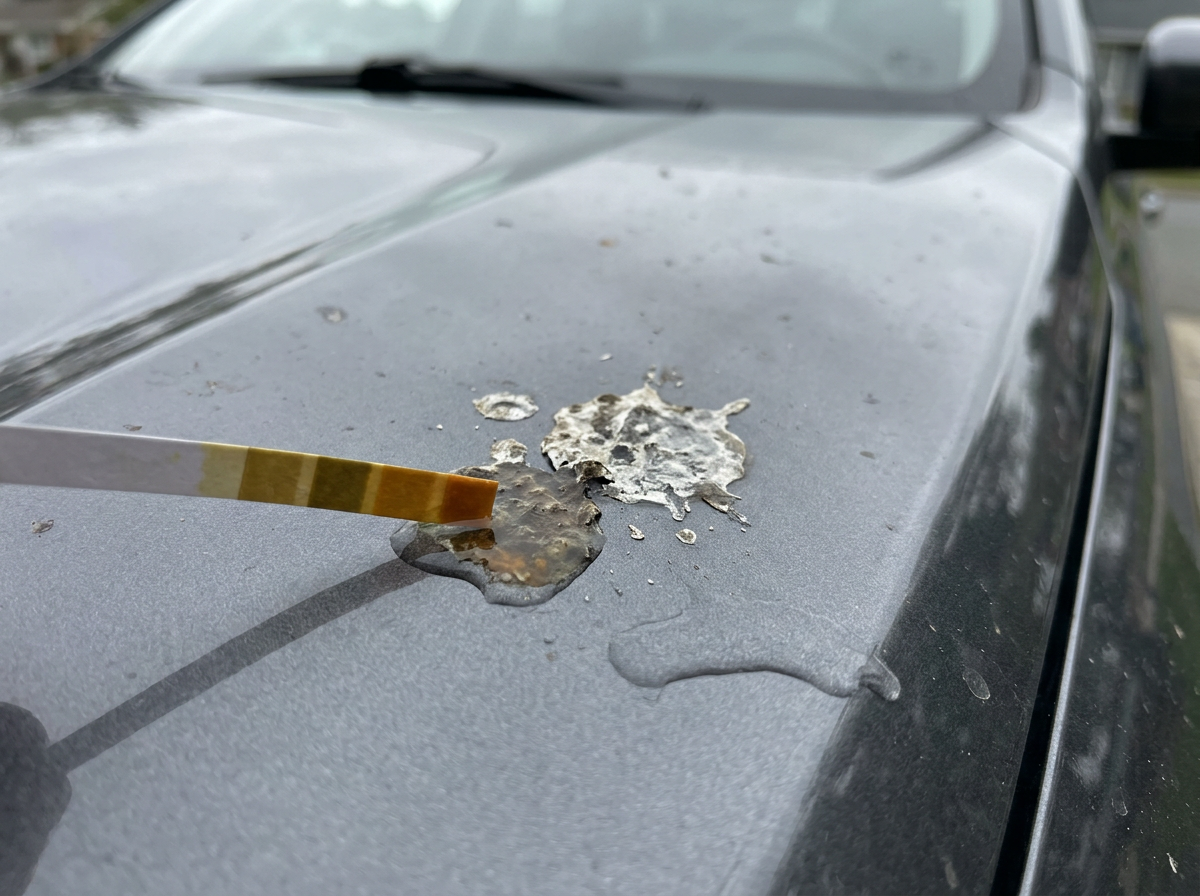
- Act quickly. Bird droppings are acidic (pH around 3.5–4.5) and begin etching clear coat within minutes in warm weather and within a few hours even in mild conditions.
- Do not wipe dry. Use a damp microfiber cloth or spray the area with water first to soften the dropping before wiping. Dry-wiping scratches the paint.
- Use a dedicated bird dropping remover spray or a diluted isopropyl alcohol solution (10–15% concentration) if you have it. Plain water works in a pinch.
- Rinse thoroughly and dry with a clean microfiber cloth.
- Check the area afterward. If the paint looks dull or hazy, the acid may have already etched the clear coat; a light polish or clay bar treatment can help restore it.
Cleaning droppings off your body or clothing
- Remove the droppings from skin by rinsing with water. Simple running water is sufficient; you don't need soap for the purification itself, though soap is fine to use.
- For clothing, remove the solid matter first (without spreading it), then rinse the affected area with water at least once thoroughly. Most scholars say one thorough rinse is sufficient; others recommend three pours of water to be safe.
- If the clothing is needed for an upcoming prayer, wash it before wearing it for salah.
- Check your wudu. If you already had wudu before the droppings hit you, your wudu is still valid — contact with najasah does not break wudu by itself. Simply clean the area and continue.
Islamic etiquette for handling najasah and resetting your intention
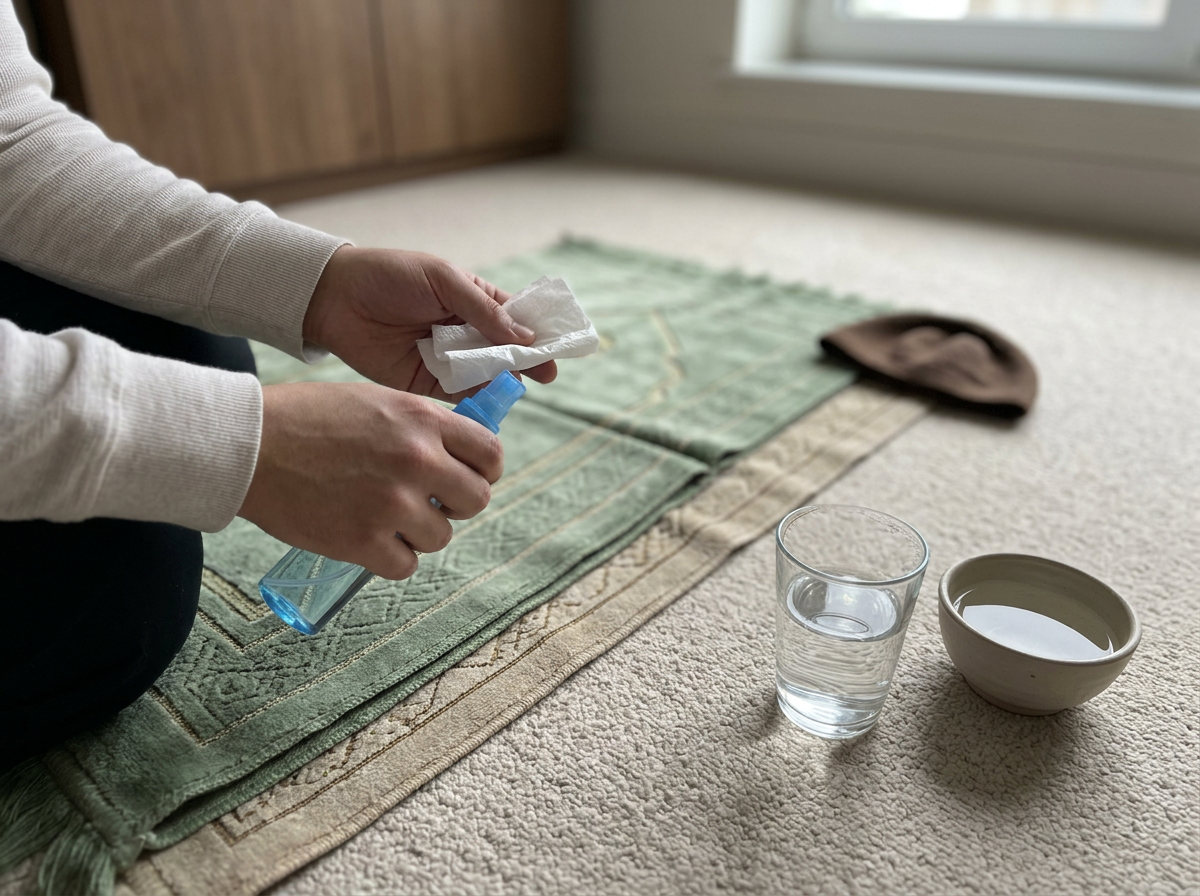
In Islamic practice, the process of handling impurity isn't just mechanical cleaning. It carries a spiritual dimension through niyyah (intention). When you clean the droppings off your body or clothes, doing so with the intention of purifying yourself for the sake of Allah (rather than just out of annoyance) transforms a mundane task into an act of worship. You don't need to say anything out loud, but many Muslims quietly make the intention in their heart before beginning the cleaning.
After cleaning, there's no specific dua (supplication) prescribed for bird droppings specifically, but a general du'a for purification or protection is always appropriate. The commonly known dua before entering the bathroom, Allahumma inni a'udhu bika minal khubuthi wal khaba'ith, is a general protection supplication and can be recited at any point when dealing with impurity. Some scholars also recommend simply saying Bismillah before beginning any purification process as part of good Islamic etiquette.
Once cleaned, you're ritually pure again. If you were in a state of wudu before the droppings landed on you, renewing wudu is not strictly required (the najasah has been removed), but you can always renew it as an act of extra caution or out of peace of mind. If you were not in wudu, you'll need to perform wudu normally before your next prayer.
Should you treat this as a sign, or just an accident?
Here's my honest take: Here's my honest take: a bird pooping on your car is a bird pooping on your car. Birds don't aim. They relieve themselves when their bodies tell them to, and cars are large, stationary, warm surfaces that birds frequently perch on or fly over. Parking under a tree or near a power line dramatically increases your odds of getting hit. There is nothing mystical directing that particular bird toward your specific vehicle at that specific moment. is a bird pooping on your car. Birds don't aim. They relieve themselves when their bodies tell them to, and cars are large, stationary, warm surfaces that birds frequently perch on or fly over. Parking under a tree or near a power line dramatically increases your odds of getting hit. There is nothing mystical directing that particular bird toward your specific vehicle at that specific moment. That is a bird pooping on your car. Birds don't aim. They relieve themselves when their bodies tell them to, and cars are large, stationary, warm surfaces that birds frequently perch on or fly over. Parking under a tree or near a power line dramatically increases your odds of getting hit. There is nothing mystical directing that particular bird toward your specific vehicle at that specific moment. is a bird pooping on your car. Birds don't aim. They relieve themselves when their bodies tell them to, and cars are large, stationary, warm surfaces that birds frequently perch on or fly over. Parking under a tree or near a power line dramatically increases your odds of getting hit. There is nothing mystical directing that particular bird toward your specific vehicle at that specific moment. bird pooping on car meaning. bird poop on left shoulder meaning.
That said, Islam doesn't discourage reflection. If seeing an unexpected event prompts you to pause, feel humility, express gratitude, or turn your thoughts to Allah, that's a beautiful response. The difference is between using the event as a doorway to mindfulness versus treating it as a message with coded meaning. The first is encouraged; the second is what the Prophet (peace be upon him) warned against when he rejected tīyarah.
Across other cultural frameworks, including Eastern European and South Asian folk traditions, bird poop on a person is widely interpreted as a sign of incoming wealth or good luck. You'll encounter this in articles discussing bird poop landing on you or on your head more broadly. These are interesting folklore traditions worth knowing, but they are not Islamic rulings, and mixing them up with Islamic theology is where confusion tends to set in.
When to talk to a scholar or imam
If you've read all of this and still feel a genuine sense of dread or anxiety about what the bird dropping "means" for your future, that's worth taking seriously, not because the omen is real, but because persistent omen-anxiety can be a sign of waswas (intrusive, obsessive thoughts), which is a recognized spiritual and psychological challenge in Islamic tradition. Scholars have a lot of wisdom to offer on this, and an imam or knowledgeable Muslim counselor is the right person to talk to. They can help you distinguish between healthy reflection and anxiety that's spiraling into something heavier.
Similarly, if you have a specific fiqh (jurisprudence) question about the najasah ruling in your particular madhab, for example, if you're unsure whether the bird species involved changes the ruling for your clothing before Friday prayer, that's a perfectly reasonable question to bring to a local imam. Fiqh questions have real answers, and scholars enjoy helping with them.
Quick comparison: car, body, and head
| Location | Najasah concern? | Affects wudu/prayer? | Islamic spiritual significance | Action needed |
|---|---|---|---|---|
| Car (property) | No (not on your body) | No | None beyond general reflection | Clean to protect paint; no ritual obligation |
| Body/clothing | Yes, if droppings touch skin or garment | Clothing must be clean for salah | Reminder of humility; not an omen | Rinse with water; re-clean clothing before prayer |
| Head/head covering | Yes, if droppings touch skin or covering | Head covering must be clean for salah | Same as body; no extra spiritual weight in Islam | Clean skin or wash head covering before prayer |
Your next steps right now
- Clean the droppings off your car promptly using a damp microfiber cloth or water spray. Don't let it sit.
- If any droppings landed on your body or clothing, rinse with water thoroughly before your next salah.
- Set the intention (niyyah) to purify yourself for Allah's sake as you clean — this turns the task into an act of worship.
- Say Bismillah or any general dua for protection and purity as you begin cleaning, if it feels right to you.
- Let go of the omen interpretation. A bird dropping is not a coded message in Islamic theology; treating it as one moves toward tīyarah, which the Prophet (peace be upon him) explicitly rejected.
- If anxiety about the "sign" persists, speak with your local imam. That conversation is exactly what they're there for.
FAQ
Do I have to wash my entire clothes if bird droppings touched only one part?
If the droppings landed on your clothes, you do not need to change your whole outfit. Clean only the affected spot until it is no longer visibly dirty, then you can pray. If you are unsure whether it has been removed, repeat washing once more, because “certainty” about cleanliness matters more than guessing.
Should I clean the bird droppings off my car for religious reasons, or only for the paint?
Leaving the paint alone is not the issue for salah, the impurity is. So if it is only on the car, you do not need wudu for the car. Still, wipe it off promptly with water and mild soap, because dried droppings are corrosive and can etch paint, especially on windshields and light-colored coatings.
What if the droppings land on my shoes or socks, do they affect salah?
If it is on your shoes or socks, the safest approach is to wash the portion that is clearly contaminated before praying, or at least wipe and then rinse so it is no longer transferable. When in doubt (for example, on thick soles), cleaning more thoroughly is recommended, since any remaining najasah can invalidate salah.
What should I do if I notice bird droppings on my clothes or body while I am already praying?
If you are already in prayer and you notice droppings on you mid-salah, stop if you need to remove impurity in a way that requires interrupting. In practice, most people pause, clean the spot as quickly as possible, and then restart, since praying with najasah on the body or clothing is not acceptable. If it is on something you can cover (like a detachable item), covering may not be enough if the najasah is on the fabric you will continue to pray in.
If it lands on my hijab or kufi, do I have to wash the entire covering or only the affected area?
If the droppings are on a head covering, the ruling depends on whether the fabric itself was contacted. If the droppings reached the covering or any area that you use in prayer, wash that part so it is clean before continuing. If it was only on the outside and you can see it is fully removed after washing, that is usually sufficient for salah.
After cleaning droppings, do I need to repeat wudu every time?
For wudu, treat this as najasah removal. If droppings touched you and you clean them, you are generally back to purity. Renewing wudu is allowed and can bring peace of mind, but it is not automatically required if you already had wudu and it was not broken. If you were not in wudu, perform wudu again before the next prayer.
I keep worrying about whether this is a bad omen. How do I handle that Islamically without feeding waswas?
If you are dealing with an anxiety spiral, the solution is to shift from “meaning-finding” to “action.” Tell yourself, “This is cleaned and finished,” then do the practical steps (clean, renew wudu if you want, pray). Waswas is often reduced when you avoid rechecking the “meaning” repeatedly and commit to a fixed, safe routine.
What if I cannot clean immediately before the next prayer time?
If you cannot clean immediately, try to remove any solid residue first and rinse as soon as you reasonably can. For the prayer time, many Muslims choose to delay only if cleanliness requires it and delaying is allowed in that case, otherwise they pray after doing what is possible without causing harm. If this happens often due to limited access to water, talk to an imam about your specific situation and constraints.
Do I need a specific dua or wording when cleaning bird droppings?
Yes, you can use general etiquette. Make niyyah in your heart to purify yourself for Allah, then you may recite Bismillah. There is no special “bird poop” dua you must say, so focus on correct removal and then proceed to pray.
Next Article
Bird Poop on Left Shoulder Meaning and Superstition
Meaning of bird poop on left shoulder: luck, spiritual signs, and astrology lore plus quick steps to clean up safely.