When you run into the phrase 'bird eye' or 'bird eyes,' the first thing to figure out is whether it's being used literally, idiomatically, or symbolically. These are genuinely different contexts, and mixing them up leads to interpretations that miss the point entirely. The short answer: check where you encountered the phrase, note what was happening around it, and use that context to anchor your reading. Everything below will walk you through exactly how to do that.
Bird Eye Meaning: Interpretations, Contexts, and Next Steps

Marcus Holloway
22 Mar 2026
Literal vs. symbolic: what 'bird eye(s)' might actually mean
The phrase 'bird eye' or 'bird eyes' can land in a few very different categories depending on where you found it. Getting clear on which category you're dealing with saves you from reading mystical meaning into a biology article, or missing genuine symbolism in a dream journal.
- Literal/biological: A reference to the physical eyes of birds, their anatomy, or their visual behavior. You'll see this in nature writing, wildlife photography guides, and ornithology resources.
- Idiomatic/everyday language: Most commonly tied to the phrase 'bird's-eye view,' meaning a high-angle perspective or an overall survey of something. Merriam-Webster defines it as 'a view from a high angle as if seen by a bird in flight' and also 'an overall or cursory look at something.'
- Spiritual/symbolic: In dream interpretation, folklore, and spiritual readings, 'bird eyes' or seeing a bird's eyes specifically can represent perception, vigilance, awareness, intuition, or elevated perspective.
- Slang or cultural reference: In some subcultures or texts, 'bird eyes' can describe a sharp, watchful gaze in a person, or appear as descriptive slang for someone who notices everything.
The phrase is almost never self-explanatory without context. A news photo caption reading 'bird's-eye view of Turkish towns' (as in recent Merriam-Webster example sentences) is purely spatial. A dream journal entry about a hawk staring directly at you through golden eyes is something else entirely. Same words, very different conversations.
What 'bird eyes' symbolizes across cultures and traditions
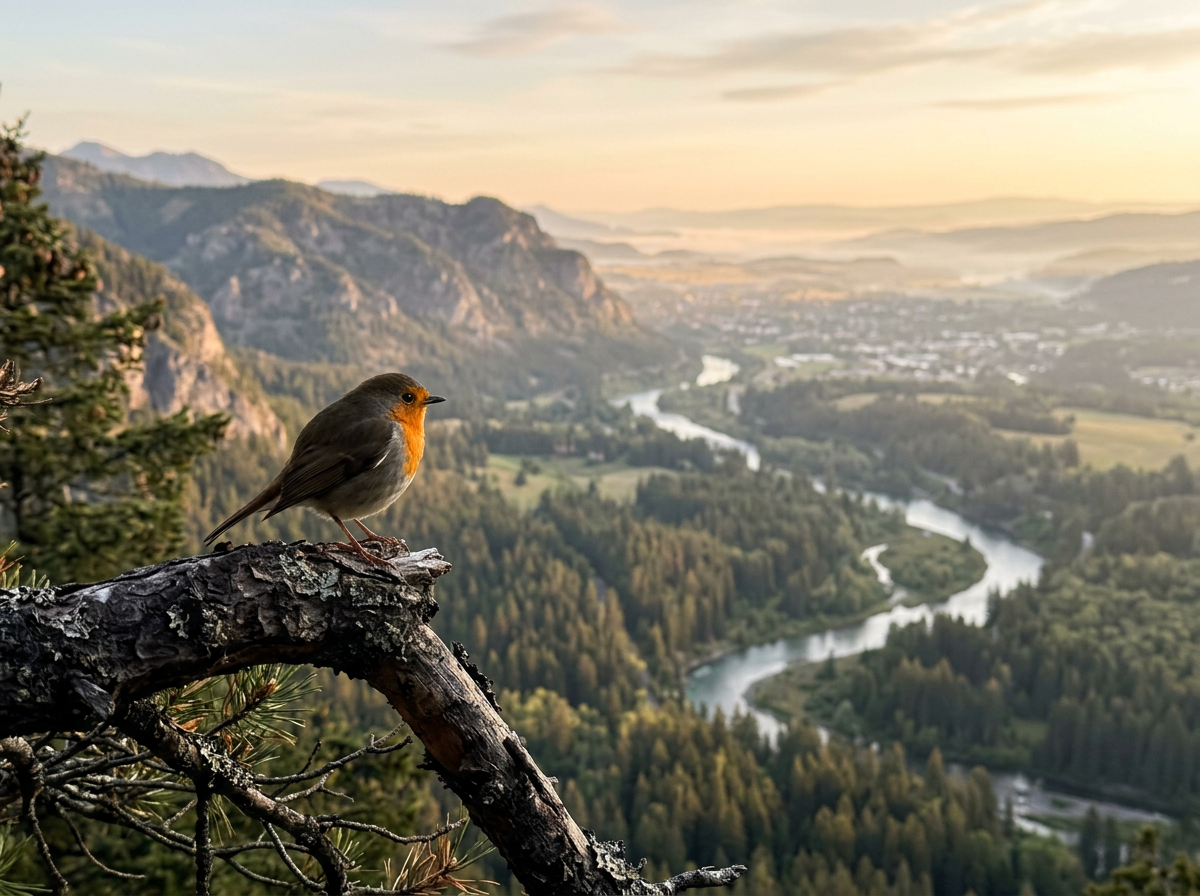
When 'bird eyes' or 'bird eye' shows up in a symbolic context, a handful of consistent themes come up across traditions, dream interpretation guides, and folklore. These aren't random associations: they're grounded in how birds actually see the world, which makes the symbolism unusually coherent.
Vision and perception
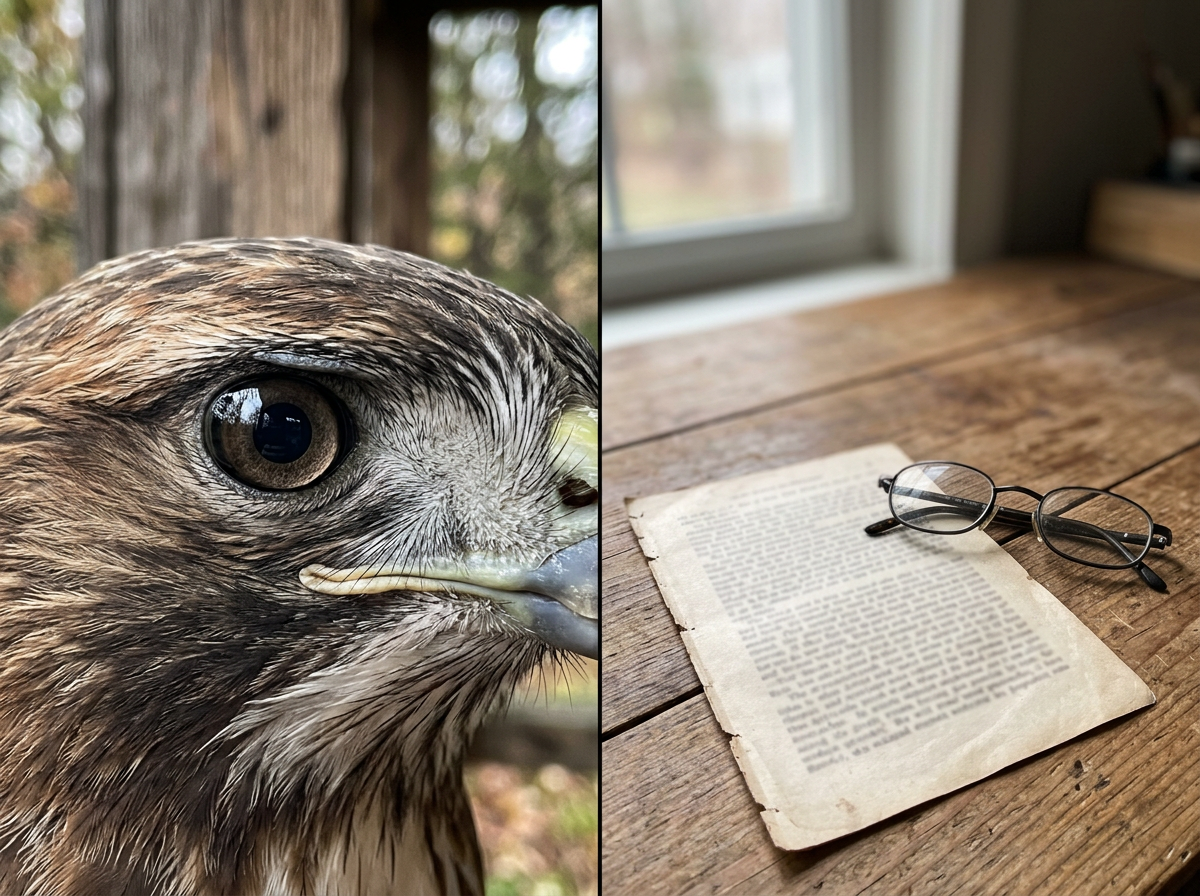
Birds are genuinely extraordinary visual animals. Their retinas are highly developed, and many species can form sharp, detailed images with color sensitivity that surpasses human vision. When bird eyes appear as a symbol, they often represent a quality of seeing that goes beyond the ordinary: noticing what others miss, perceiving hidden truths, or having sharp discernment. The metaphor has biological teeth to it.
Vigilance and awareness
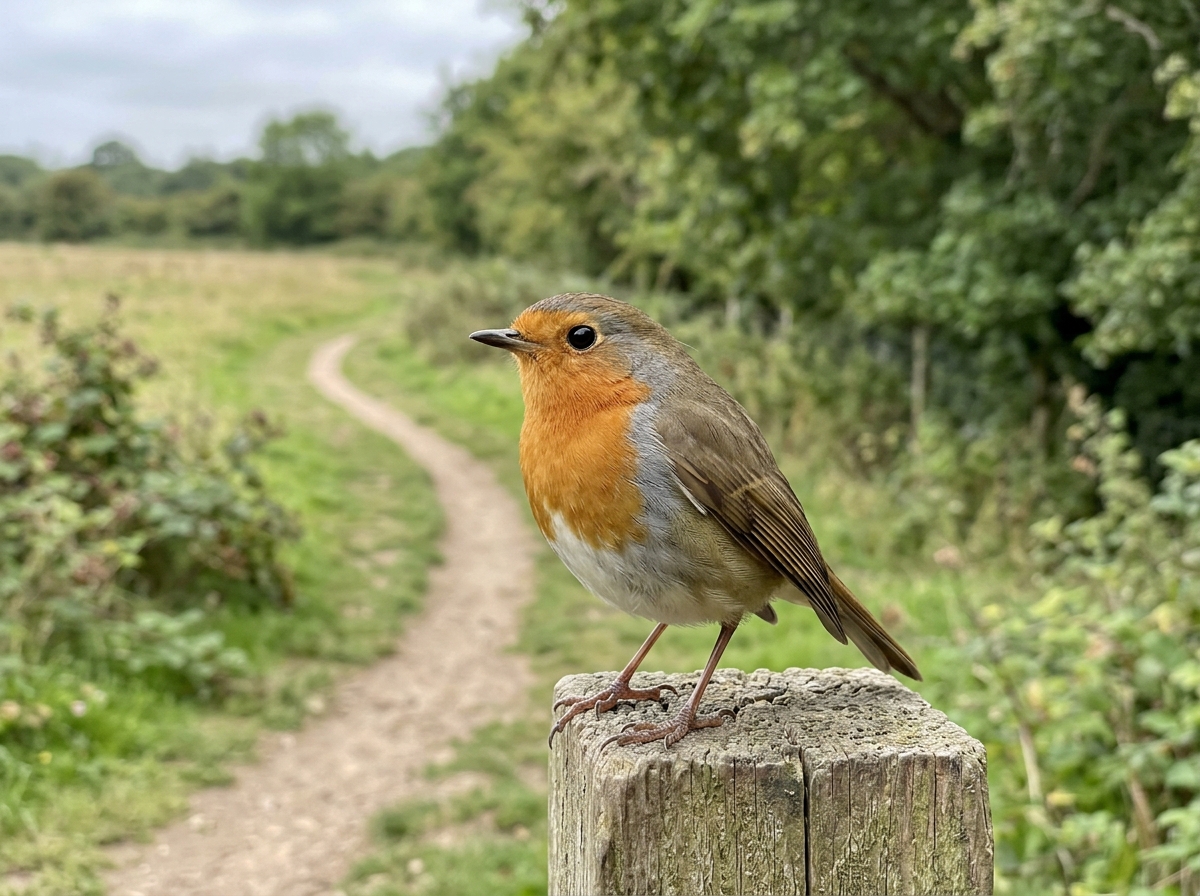
Most birds have eyes positioned on the sides of their heads, giving them wide monocular vision that lets them scan two large areas at once. The Missouri Department of Conservation notes that this placement helps birds produce 'large images in sharp detail' while monitoring for threats from nearly all directions. Symbolically, this maps directly onto vigilance: a bird's eyes represent staying alert, watching your surroundings, and not being caught off guard.
Elevated perspective and freedom
The 'bird's-eye view' idiom carries this meaning most directly. Seeing from above implies freedom from ground-level limitations: you can see the whole picture, not just the part you're standing in. In spiritual readings, bird eyes sometimes symbolize stepping back from a situation emotionally to gain clarity or a wider view of your life.
Intuition and the unseen
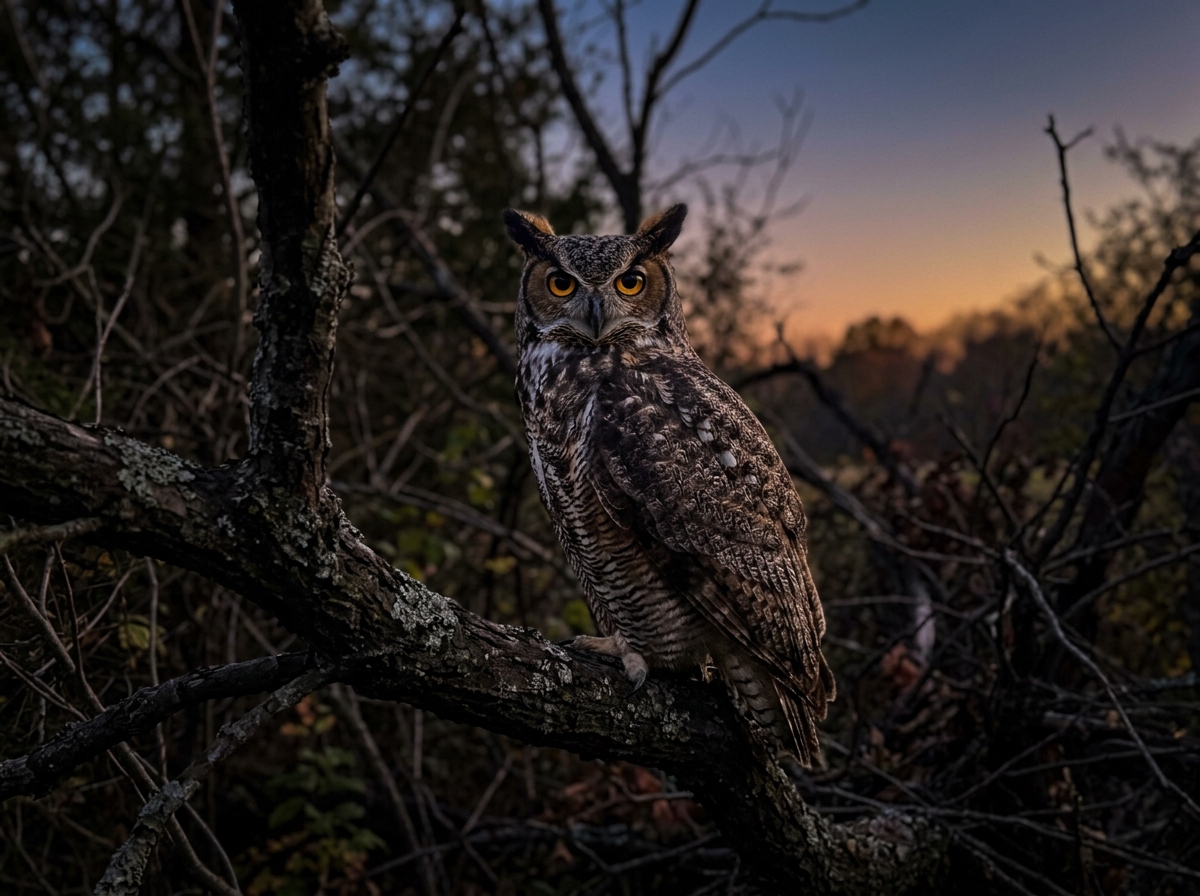
Certain birds, particularly owls and hawks, carry strong associations with intuition and seeing what is hidden. Owls, for example, have forward-facing eyes that support binocular vision and depth perception, giving them a focused, penetrating gaze that many cultures have read as wisdom or otherworldly knowing. If 'bird eyes' appears in a spiritual or folkloric context and the bird type is specified, the species matters a lot for interpretation.
How to read it based on where you found it
Context is everything here. The same phrase carries entirely different weight depending on whether you found it in a dream, a piece of writing, a conversation, or a spiritual reading. Here's how to approach each scenario.
In a dream
Dream symbolism guides, including those drawing on Jungian principles, generally recommend treating dream images symbolically rather than literally. If you dreamed of bird eyes, the first move is to note the emotional tone: were the eyes comforting, unsettling, neutral? What kind of bird? What were you doing? Dreamspoken's practical approach to dream interpretation suggests recording recurring symbols with dates, emotions, and a draft meaning, then treating that draft as a hypothesis to test rather than a fixed answer. The eyes themselves often symbolize the quality of seeing: clarity, judgment, or being watched.
In a spiritual reading or folklore context
If you encountered 'bird eyes' in a spiritual reading, tarot spread description, or piece of folklore, look at the surrounding language. Is it about perception, awareness, or judgment? Is a specific bird mentioned? Spiritual references to bird eyes typically emphasize one of the core themes: vigilance, elevated perspective, or intuitive sight. It's worth approaching these readings as interpretive frameworks rather than fixed definitions, since different cultural traditions assign different meanings to the same imagery.
In everyday speech or writing
In most everyday writing and conversation, 'bird's-eye view' is the dominant usage, and it means exactly what Merriam-Webster says: a high, overview perspective. News reports, travel writing, and business strategy documents use it constantly in this sense, as in 'a bird's-eye view of your essentials' or 'a bird's-eye view of the city.' If the phrase is in a non-spiritual, non-dream context, this is almost certainly the meaning. bird side view meaning. bird gazing meaning
In a quote or literary passage
Writers use bird-eye imagery to suggest sharp observation, a character who notices everything, or a narrative voice that sees from above. If you're parsing a quote or passage, ask whether the author is emphasizing the quality of vision (perception, sharpness) or the elevation of the viewpoint (distance, overview). Those are related but distinct ideas, and the surrounding text will usually tip you off.
What real bird eyes tell us about the metaphor
One of the reasons bird-eye symbolism holds up so well is that it's rooted in genuine biology. Understanding a few real facts about avian vision makes the metaphors feel less like poetic invention and more like earned observation.
- Birds have highly developed retinas with color-receptive cones that produce sharp, detailed images. Many species see a wider color spectrum than humans.
- Most birds have eyes on the sides of their heads, giving wide monocular vision for scanning large areas simultaneously. This is why birds are so hard to sneak up on.
- Predatory birds like owls have forward-facing eyes for binocular vision and depth estimation, but owls' eyes are largely immobile within the skull. An owl turns its whole head rather than moving its eyes.
- Birds have a nictitating membrane, a translucent third eyelid that sweeps across the eye to protect and moisten it without blocking vision entirely.
- Research on bird sleep has found that a bird can selectively keep one eye open while sleeping, allowing part of the brain to stay alert even during rest. This is vigilance taken to a literal extreme.
These aren't just trivia points. They're why 'bird eye' as a symbol of perception and vigilance feels intuitively right. When cultures across history reached for an image of sharp, wide, ever-watchful sight, birds were the obvious reference point. The metaphor grew from observation of real animals.
How to nail down the exact meaning in your situation
If you're still unsure what 'bird eye' or 'bird eyes' means in the specific context you encountered, work through these questions in order. They'll get you to a confident interpretation faster than any symbol dictionary.
- Where did you see or hear it? (Dream, book, conversation, spiritual reading, nature article, social media, film?) The source category alone narrows the field dramatically.
- What are the exact words around it? 'Bird's-eye view of the city' and 'the hawk's eyes watched me' are using bird-eye imagery in completely different registers.
- Is a specific bird named or described? Species matters. An eagle's eyes carry different cultural weight than a sparrow's. Owls, hawks, ravens, and peacocks all have distinct symbolic histories.
- What emotion or atmosphere surrounds the phrase? Comfort, dread, awe, clarity? In dream and spiritual contexts especially, emotional tone is a major interpretive clue.
- Is the phrase about a perspective/viewpoint, or about the eyes themselves as an object? 'Bird's-eye view' is about vantage point. 'Bird eyes' as a focused image is about the quality of gaze and what it represents.
- Are there other bird-related words nearby? Terms like 'pinning,' 'gaping,' 'preening,' or 'nesting' suggest a literal ornithological context. Words like 'awareness,' 'perception,' or 'spirit' point toward symbolism.
Once you've answered these, you won't need to guess. The context will almost always resolve the ambiguity. If you're working with a dream specifically, jot down everything you remember before trying to interpret anything: the setting, the bird's behavior, what the eyes looked like, and how you felt. Interpretation built on recalled detail is far more useful than interpretation built on the phrase alone.
Bird-language expressions you might be confusing this with
Several related phrases are close enough to 'bird eye' that they're worth distinguishing, especially if you're trying to research the exact bird style meaning you encountered.
| Expression | What it means | Context it appears in |
|---|---|---|
| Bird's-eye view | A high-angle overview, literal or figurative | Everyday speech, journalism, geography, strategy |
| Bird eye (symbolic) | Perception, vigilance, awareness, elevated perspective | Dream interpretation, spirituality, folklore, literature |
| Bird eye pinning | Rapid dilation and contraction of a parrot's pupils, often reflecting excitement or emotion | Avian behavior, parrot keeping, ornithology |
| Bird gazing | The act of watching birds, or in some spiritual contexts, observing birds for omens or insight | Birdwatching, divination, folklore |
| Bird gape | The wide-open mouth posture of a nestling begging for food, or a threat display in some species | Ornithology, bird behavior |
| Bird view / bird side view | Descriptive terms for how a bird appears from different angles, used in illustration, art, and field guides | Visual arts, field guides, photography |
If you encountered 'bird pinion meaning' specifically, that's a very distinct behavioral term related to parrots and their rapid pupil changes, and it's worth researching separately. bird pinion meaning Similarly, 'bird's-eye view' and plain 'bird eye' are close in spelling but not always used interchangeably: the former is a fixed idiom with a specific definition, while the latter is more open to context-dependent interpretation.
The broader takeaway is that bird-related language is richly layered in English and across many cultural traditions. Whether you're tracking down the meaning of a phrase in a conversation, unpacking a dream image, or trying to understand a piece of writing, the bird's eye keeps showing up because it genuinely represents something: a quality of seeing that combines sharpness, breadth, and elevation. That's a powerful combination, and it's one that connects literal biology to metaphor in a way that feels earned rather than arbitrary.
FAQ
Is “bird eye” always the same as “bird’s-eye view”?
In standard English, “bird eye” is rarely used as a fixed idiom by itself. Most everyday instances that mean “overview perspective” use “bird’s-eye view.” If you saw “bird eye” without an apostrophe, the meaning is more likely context-driven (for example, sharp observation or vigilance) unless the surrounding text clearly matches the idiom.
How can I tell if “bird eye” means being watchful versus having a better viewpoint?
To tell whether the phrase is about “who is watching” versus “how you see,” check agency in the sentence. If the wording implies the bird is looking at someone or something, interpret it as vigilance or being observed. If it focuses on a narrator or camera standpoint (distance, overview, whole picture), interpret it as elevated perspective.
Does the behavior of the bird change the meaning of bird eyes in a dream?
In dreams, the bird’s behavior often matters as much as the eyes. If the eyes follow you, that often points toward feeling monitored or judged. If the bird is still and calm, it can lean toward clarity and insight. If the bird attacks or lunges, it more often reflects threat awareness and heightened discernment.
What’s a common interpretation mistake people make with “bird eye” symbolism?
Yes. Even when the phrase is symbolic, readers can make a mistake by mapping it to only one theme, such as “hidden truth” every time. A better approach is to score the symbolism across three questions: Is the tone alertness, insight, or evaluation? Is there a sense of threat or relief? Are you the observer or the observed?
What if the text or dream doesn’t specify which bird the phrase refers to?
If no bird species is named, use the “general bird” meaning first, which usually centers on vigilance, wide scanning, and sharp perception. Only shift to more specific themes (for example, owl-like depth intuition) when the text explicitly identifies the bird or describes distinctive traits.
What text clues tell me whether the phrase is being used as an adjective or a metaphor?
For writing and conversation, look for grammatical cues. “Bird-eye” or “bird’s-eye” usually works like a modifier for a noun (a bird’s-eye view of… ). “Bird eye” used as a standalone image is more likely metaphorical and should be interpreted based on nearby adjectives and the emotional tone.
How should I apply “bird eyes” in a spiritual reading without over-literalizing it?
If you are trying to interpret a spiritual or tarot-style use, avoid treating it as a universal definition. Most practical readings treat it as a theme prompt, so ask what action or mindset the surrounding message is encouraging (for example, pause and reassess, stay alert to details, or look from a higher standpoint).
Could “bird eye” mean something literal in a scientific or wildlife article?
If the phrase is used in a biology or wildlife context, “bird eye” could refer to anatomy or vision capabilities, like lateral eye placement and sharpness. In that case, interpret the meaning through the article’s specific claims rather than symbolism, and watch for technical terms like retinas, binocular vision, depth perception, or field of view.
Is there a fast method to choose the correct meaning when context is unclear?
If you want a quick self-check, rewrite the sentence using one of three neutral equivalents and see which fits naturally: “a high overview perspective,” “careful, vigilant watching,” or “sharp discernment.” The version that keeps the same emotional tone and agrees with the sentence structure is usually the intended meaning.
Next Article
Bird Pooping on Car Meaning Spiritual and Practical Steps
Understand bird pooping on car meaning spiritually and practically, plus safe cleanup steps and prevention tips to stop